

### Blog Post:
Focus Keyword: floating shelves DIY installation
Thinking about tackling a floating shelves DIY installation? You’re in the right place. This comprehensive, no-nonsense guide arms you with pro tips, the unavoidable pitfalls, field-tested tricks, and an honest look at what it takes to get floating shelves up—without regrets or surprises. Whether you’re making a minimalist statement or organizing your living room, it pays to install them the right way.
Key Takeaways
- Proper measuring, drilling, and mounting to studs are critical for a safe, level, and durable floating shelf install.
- Common pitfalls include misaligned brackets, tight fit during mounting, and overestimating shelf weight limits.
- The right tools and preparation make the difference between frustration and flawless results—rushing leads to problems.
- Understanding Floating Shelves DIY Installation
- Step-by-Step Guide: How to Install Floating Shelves Like a Pro
- Advanced Analysis & Common Pitfalls
- Conclusion
- Frequently Asked Questions
Understanding Floating Shelves DIY Installation
Floating shelves offer clean lines and a modern look, appearing to “float” without visible supports. The concept is simple: concealed brackets anchored to the wall support a hollow or solid shelf slid over them. The catch? Floating shelves only look effortless; the installation requires precision that’s easy to underestimate.
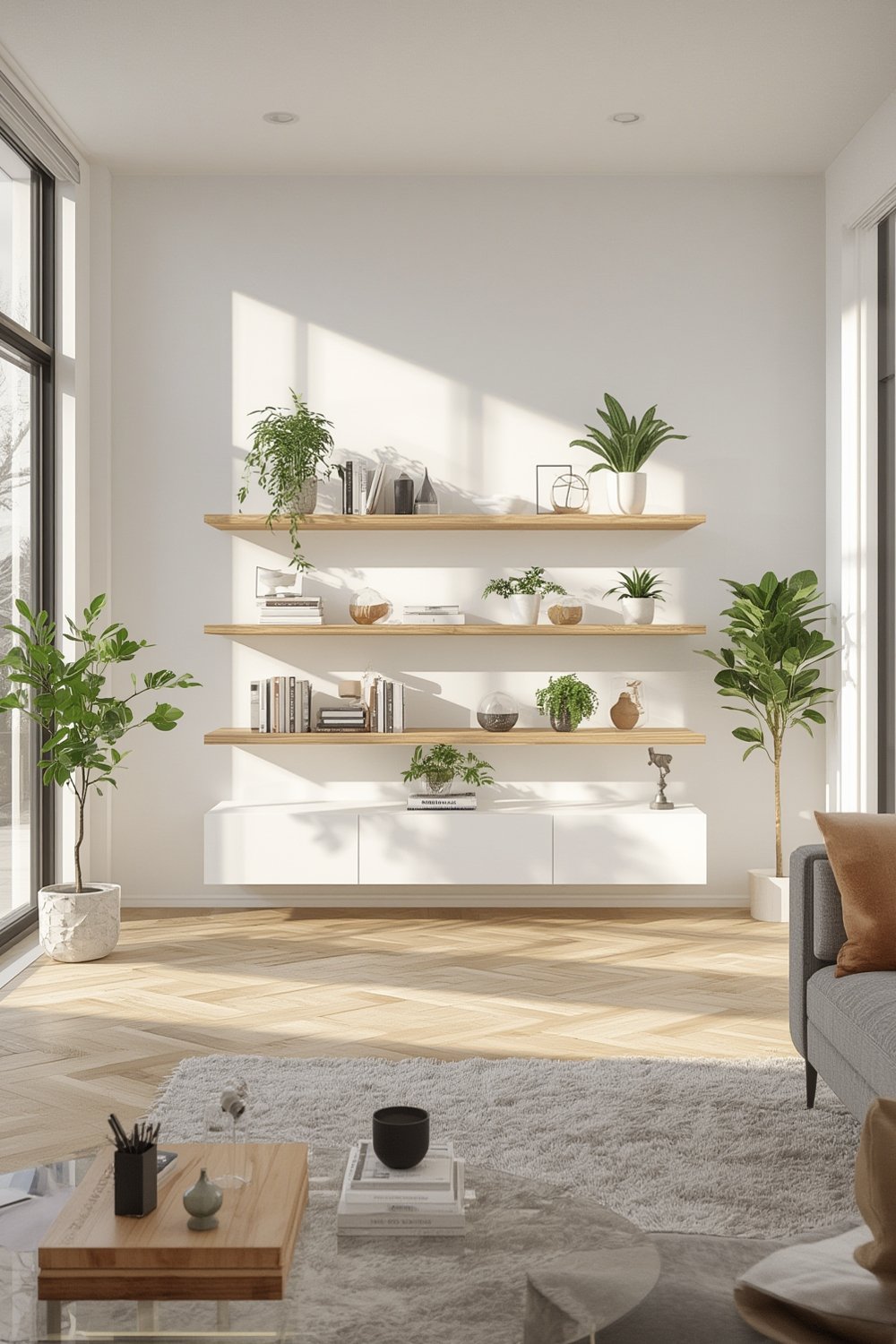
Why bother with DIY, when so many shops offer pre-made shelves with mysterious $500+ price tags? Because custom floating shelves can be built better, stronger, and for less—if you plan and execute carefully. They’re a popular upgrade for open-concept kitchens, bathrooms, or living room displays. Done right, they boost both appeal and value for any sized home.
Most floating shelves fail from poor measuring, skipping stud connections, or using flimsy brackets. The right process, however, means your shelves resist sagging, keep frames and books level, and don’t rip out from the wall—whether installed on drywall, tile, or tougher materials. If you want to turn an easy DIY project into a pro-level result, read on.
Step-by-Step Guide: How to Install Floating Shelves Like a Pro
Ready for execution? Here’s a concise, field-tested approach for floating shelves DIY installation that works on drywall, into studs, and even with tile or brick variations.
- Plan Shelf Placement & Weight
Decide on length, depth, and material. Thick, solid wood (1.5”+) like butcher block handles the most weight. Measure and pencil bracket locations where studs are available (a magnetic stud finder is required). Brackets in at least two, preferably three studs, are essential for real strength. If installing above tile, plan to anchor brackets first, then run tile around them (source). - Gather Tools & Hardware
You’ll need: magnetic stud finder, power drill, a 1/2” drill bit to match the bracket rods, a self-centering drill guide, square, circular saw, sander, screws or lag bolts. For heavy installs, a helper is a must. Steel brackets are the standard—look for versions at least 8”-10” deep for bigger shelves (source). - Prep Wall and Brackets
On drywall: use the stud finder to mark stud edges. For plaster or brick, plan on masonry anchors (not always as strong; check thickness). Trace bracket outlines on the wall. If routing out drywall to recess the bracket baseplate, use a utility knife carefully (source). - Install Brackets – Level & Secure
Hold brackets against the wall, using a square to ensure a perfect perpendicular setup. Brackets must be level or shelves will tilt and items will slide. Pre-drill holes into the studs; a self-centering guide ensures you won’t get “wobble.” Sink lag bolts or heavy-duty screws deep into studs. - Prepare the Shelf
Cut wood to size, sand the edges, and finish as desired. Use the bracket as a template to mark and drill holes all the way through the shelf. Use a 1/2” bit for 1/2” rods: tight is good, but too tight can split wood or make mounting impossible. Dry-fit on the brackets before final install. - Mount the Shelf to Brackets
Slide the shelf onto all bracket rods. If it binds, use a rubber mallet or a scrap 2×4 as a buffer to tap it flush (source). Avoid excessive force which can crack wood. If installing alone, support the shelf with a temporary stack of books or blocks underneath. - Final Level Check & Touch-up
Double check with the level and make micro-adjustments before loading up your shelf. Seal screw heads or open holes with wood putty, and cover with paint or finish.
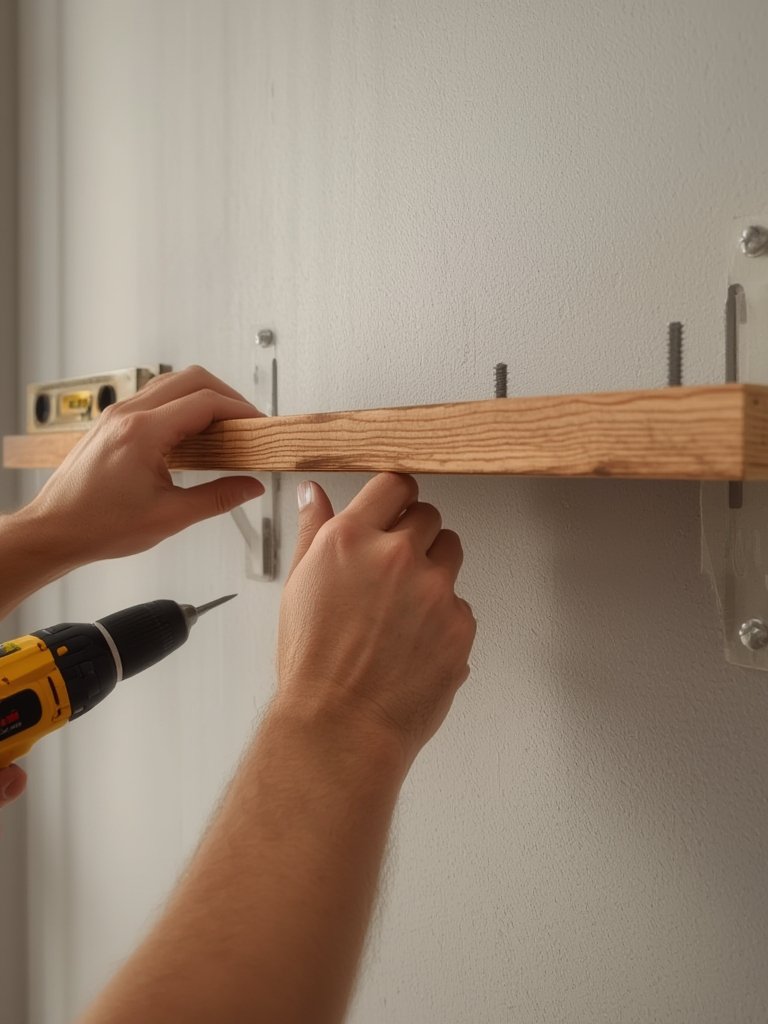
The order above guarantees your floating shelves DIY installation won’t just look pro, but actually be safe for daily use. By the way, if you’re planning multiple home upgrades, see these top home upgrade ideas to maximize comfort and value.
Advanced Analysis & Common Pitfalls
DIY floating shelves sound simple, but the biggest failures come from overconfidence or skipping steps. Consider these real-world issues:
- Precision Drilling & Measuring: Misalignment by even 1/8″ between wall brackets and shelf can make installation impossible or cause the shelf to slope.
- Tight Fitting Brackets: Sliding a heavy shelf onto long steel rods can require significant force. Over-tight holes risk splitting wood or getting stuck mid-way. Always dry-fit, and sand holes if needed (source).
- Not Mounting into Studs: Anchoring into drywall alone will result in disaster. Unless you’re mounting small lightweight display shelves, always use multiple studs and heavy-duty hardware.
- Leveling Neglect: Unlevel brackets translate to useless shelves—objects will slide, liquids will spill, and the eye will notice immediately.
- Wall Type Challenges: Tile or brick walls require pre-planning (drill before tiling or use masonry anchors), while plaster requires gentler pilot holes to avoid cracking.
- Underestimating Weight: Not every floating shelf is made to handle books, stereos, or heavy ceramics. Overloading risks both sudden and gradual failure.
| Wall Type | Complexity (1-5) | Critical Techniques | Extra Notes |
|---|---|---|---|
| Drywall | 3 | Cut out & mount into studs, check for level, recess plate for flush fit | Never mount floating shelves with drywall anchors alone |
| Tile | 4 | Install brackets first, tile around; carefully measure bracket depth considering tile thickness | Plan in advance—post-tile drilling risks cracks |
| Brick | 4 | Use masonry bits and anchors, ensure deep purchase | Weight limits may be less than studded drywall if facing only brick |
| Plaster | 3 | Pilot holes, slow drilling, always hunt studs | Higher risk of cracks—go slow |
Competitor articles often gloss over detailed prep and the nuances of complex wall types (review French cleat options here). For a more holistic look at renovation safety and maintenance, see this ultimate home maintenance guide.
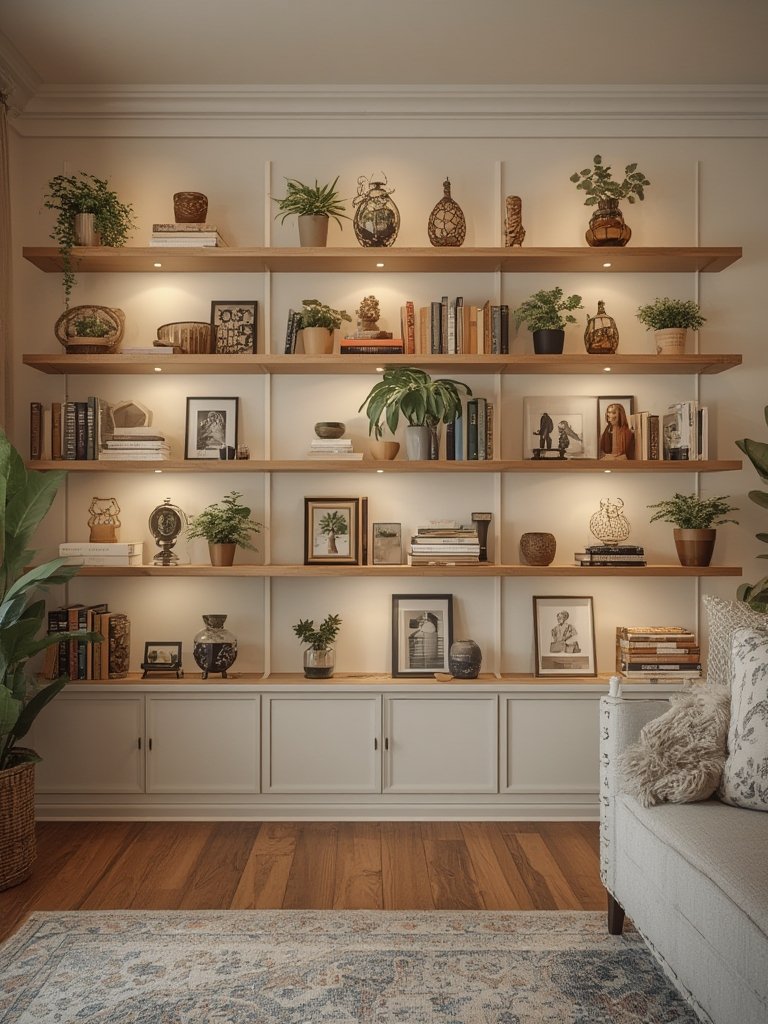
Custom floating shelves between cabinets or irregular spaces introduce another variable—always measure for out-of-plumb surfaces and adjust your shelf or bracket placement accordingly. Check out more easy DIY home projects for optimizing space and adding style on a budget.
Conclusion
Installing floating shelves is one of the most rewarding home improvement projects when done meticulously. The secret to a smooth floating shelves DIY installation isn’t buying the most expensive materials—it’s about careful planning, using the right hardware, drilling with precision, and never cutting corners on bracket placement. Invest a bit of time up front, and your shelves will add lasting style and function to any space.
Ready to transform your living room or kitchen with more challenging builds? Check out this ultimate guide to renovations or explore simple home DIY projects curated for all skill levels. Have questions before you start? Dive into our FAQ below or leave a comment for personalized guidance!
Frequently Asked Questions
Can I install floating shelves without mounting into studs?
It’s strongly discouraged. Drywall anchors alone often fail over time, especially for heavy or frequently used shelves. For safety and durability, always install brackets directly into wall studs whenever possible.
What tools are absolutely essential for a safe floating shelf install?
At a minimum: a magnetic stud finder, a power drill, a self-centering drill guide, a square, and a reliable level. For solid installs, invest in quality Steel brackets and heavy-duty screws or lag bolts.
How deep should floating shelf brackets be?
For standard shelves 8-12″ deep, brackets should project at least 7-9″ into the shelf for adequate support. Deeper shelves, or those supporting heavier items, require deeper brackets and additional anchors into multiple studs.
Can I mount floating shelves on tile or brick?
Yes, but the method changes. For tile, install brackets before tiling if possible, drilling pilot holes in the wall. For brick, use heavy-duty masonry anchors and matching masonry drill bits. Always check your wall’s ability to carry the expected load.
What is the weight limit for DIY floating shelves?
It depends on shelf thickness, bracket quality, and anchoring. A 1.5″ thick solid wood shelf on three steel brackets into studs can typically handle 30-50 lb safely. Lighter builds or shelves in non-stud material carry far less. Always err on the side of caution.